Romania, In Confidence: How a Design Culture Became a Fashion
What’s happening in Romania is not a trend ripple; it’s a systems shift. Education feeds runway. Craft meets engineering. Small-run production behaves like luxury. And the calendar - stretching from Iași to Cluj, Sibiu to Bucharest - has matured into an ecosystem that rewards rigor over noise. The result: a fluency of cut and conscience that reads globally without losing its accent.
The mood
Step into a student studio in Cluj and you’ll see a hem being hand-finished next to a 3D print test. In Sibiu, a show unspools across a cobbled courtyard where the city becomes a set. In Bucharest, a pop-up hangs tailoring like sculpture: seams you feel before you see, shoulders that speak softly but insist on posture. The work is not loud; it’s sure. It offers the rare combination of cultural memory and modern engineering—clothes that photograph dramatically and live intelligently.
Why here, why now
1) The pipeline is real
Romania’s art schools have quietly engineered a short distance between critique and commerce. Graduation is not a curtain call; it’s a handover. Faculty bring in external juries, students prototype under constraints, and public showcases test ideas against a real audience. That discipline shows on the rack: silhouettes are editorial, construction is credible, and the edit is mercifully tight.

2) A production culture built for modern luxury
Decades of apparel manufacturing mean pattern cutters and finishers who understand scale - especially the small kind. Where “luxury” once implied complication, Romania offers precision: short runs that respect fabric, lead times that respect reality, and partners fluent in compliance and finishing. It’s the kind of infrastructure contemporary labels need but rarely find: close, exacting, and human.

3) Logistics that favor creativity
Proximity to EU markets, streamlined movement, and producers within a day’s reach let ideas travel quickly. Samples don’t stall. Fit sessions happen in person. A dress can be adjusted on Tuesday and shot on Thursday. That speed doesn’t encourage rushing; it enables refinement.

4) Heritage as R&D, not ornament
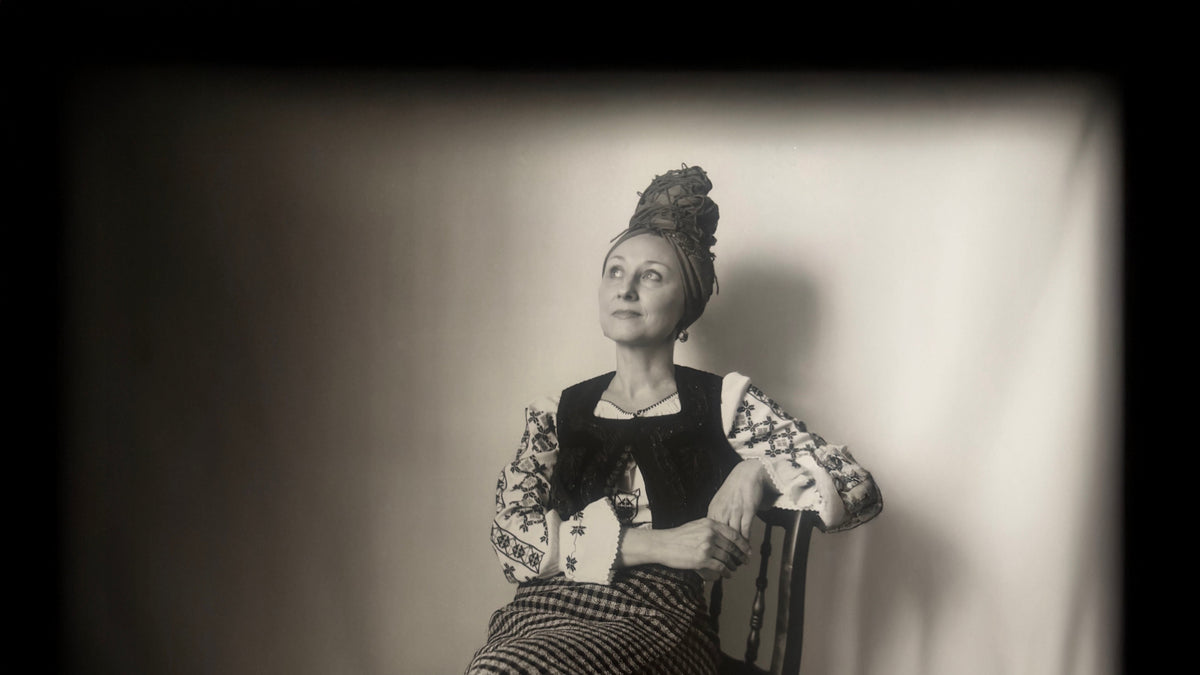
The vocabulary is local-ie logic, regional weaving, macramé patience - but the grammar is global. Designers translate codes into structure: braids become scaffolding, cross-stitch becomes surface, hand-knotting becomes volume. Nothing is pasted on; everything is engineered in. You feel it most in the way pieces hold space and then surrender to movement.

5) Circularity with taste
Deadstock silks, reconstructed denim, reclaimed wool - not as apology, not as marketing, but as material intelligence. Romania’s best work treats circularity as a design constraint that creates elegance: the seam placement that comes from an irregular bolt; the paneling dictated by a rescued textile. Beauty, here, is not despite the rules. It’s because of them.

6) The digital psyche, tailored
The country’s most experimental voices play with the split between body IRL and identity URL - pixels treated like beads, polygons like pattern pieces. The effect is surreal but grounded: garments that flirt with the screen while being cut for life off it. It’s clever in construction, not cutesy in print.

The cities that shape the story
Iași
A festival city where runway, education, and exhibition speak in chorus. The mood is connective - academia meets atelier, and audiences move fluidly between panels and shows. Think of it as the network switchboard.
Sibiu
Site-specific fashion writ beautifully literal. Bridges, courtyards, stairways - Sibiu turns the city into a mise-en-scène, forcing designers to consider exit, entrance, wind, and stone. Clothes look better under weather; ideas, stronger in public.
Cluj-Napoca
A northern studio mind-set: prototypes, workshops, graduate showcases that feel like early access to what you’ll want next season. Education and industry share a table; nuance sneaks into seams.
Bucharest
Capital confidence: production resources, retailers with a trained eye, and the pop-up scene where tailoring meets installation. It’s where capsules harden into wardrobes.
What it looks like (three pillars)
Heritage, Engineered
Sculptural drape, generous ease where it matters, precision where it counts. Textiles carry story without performative folklore. You’ll see laddered seams that recall weaving logic; cuffs that nod to handwork but close with clean hardware.
Circular, Not Compromised
Reconstructed denim mapped like a city plan. Deadstock silks cut to honor scarcity. Jackets where paneling is both necessity and design. Imperfections aren’t hidden; they’re edited.
Digital/Sculptural
Surfaces read pixelated up close; volumes read architectural from two steps back. Geometry is a cut, not a print. The pieces photograph with authority and feel surprisingly easy on the body.
The calendar
-
Romanian Creative Week / Romanian Fashion Week — Iași (May). A high-yield snapshot: runway, exhibitions, academia in sync.
-
Feeric Fashion Week — Sibiu (July). City-as-runway. Strong international attention.
-
Transilvania Fashion Festival — Cluj-Napoca (September). Shows + conferences; tight university–industry bridge.
-
UAD Fashion Gala — Cluj-Napoca (July). Graduate and master collections with real-world finish.
-
Bucharest Fashion Week — Bucharest (March). Capital platform; useful for seeing polish and production readiness.
-
Romanian Design Week — Bucharest (May). Cross-disciplinary; fashion meets product, architecture, graphics—collaboration incubator.
What this means for the wardrobe
The promise is longevity without dullness. Cuts that stand up to repeat wear; fabrics that resist the tyranny of “occasion only.” Pieces that deliver presence without demanding a speech. You can build a year-round uniform here: tailored outerwear with spine, knit architecture that reads as considered rather than cozy, denim that questions and still flatters.
What this means for culture
Romania is expanding European fashion’s center of gravity. Not by chasing Parisian finish or London wit, but by offering something Europe always values when it finds it: integrity. Integrity of make, of material, of story. Clothes that carry memory forward, not as heritage theater but as living design.